
AI News, 8 November 2026

Sunday 8 November

Could HBF be the solution to the Memory bottleneck? By Investing.com
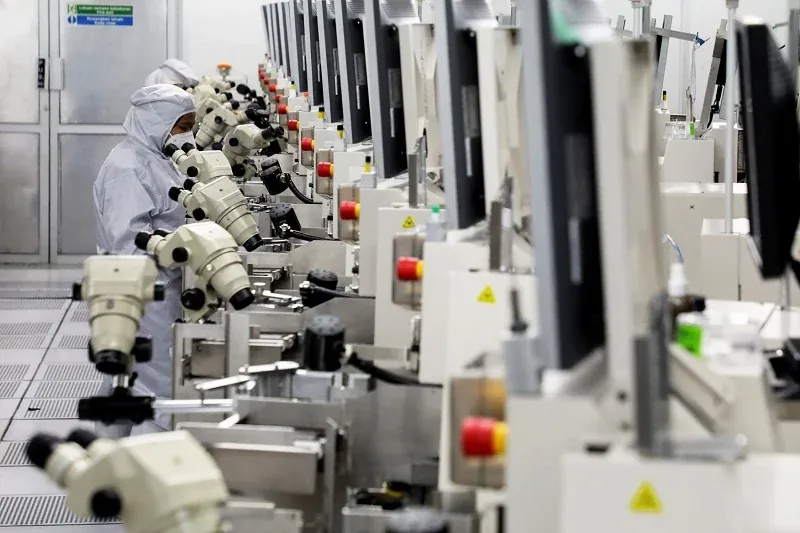
AI-generated summary Bernstein reports that high-bandwidth flash technology could ease artificial intelligence infrastructure constraints by combining high read bandwidth with significantly greater capacity and a lower cost per gigabyte than high-bandwidth memory. SanDisk Corporation is targeting its first product samples for inference applications in 2027, though Bernstein notes that the technology faces hurdles such as a lack of formal endorsement from Nvidia.

White House Request Raises US AI Safety Center Independence Concerns

AI-generated summary The Associated Press reported that officials at CAISSI were asked to report informally to a White House office, raising concerns about the independence of federal AI safety evaluations. Critics warned that the arrangement could politicize cybersecurity and bioweapon decisions, while others argued that closer ties to Donald Trump could bring greater prominence and funding.

Also covered by Tech Times

Deep Learning Compilers: Architecture, Optimization, and Empirical Characterization

AI-generated summary This paper presents a systematic analysis of deep learning compilers, covering their architectural evolution, compilation workflows, optimization techniques, and emerging research directions. Experiments using PyTorch and TorchInductor on an NVIDIA RTX A6000 demonstrate speedups of up to 8.21x for fusion-friendly computation graphs, while other workloads exhibit limited improvements.

Characterizing CUDA Locality Domains on Blackwell GPUs

AI-generated summary A report evaluating the Locality Domain feature introduced in CUDA 13.4 examines multi-die scaling, data placement, and cross-die communication on NVIDIA Blackwell GPUs. The study demonstrates that die-aware adaptations achieve significant speedups for tools including NCCL 2.32.3, nvbandwidth, and DeepGEMM, while also identifying memory allocation overheads.

HPC-Bench: A Comprehensive Benchmark for High Performance Computing Codes

AI-generated summary HPC-Bench is a performance-grounded benchmark introduced to evaluate large language models as optimizers of computational kernels in realistic high-performance computing workloads. The benchmark includes 114 workloads across 16 high-performance computing computational motifs and provides an automated evaluation pipeline with correctness-gated metrics.

Suno AI music generator sued again for copyright infringement

AI-generated summary Rights holders for Elvis Presley and Eminem filed separate lawsuits against Suno claiming the music generator committed copyright infringement by using artist likenesses to create artificial intelligence songs. Suno stated in response that it prohibits unauthorized use of artist work and specific artist names while screening for potential misuse.

Stocks will tumble much further as AI investment will slow next year then fall in 2028 and drag GDP down too, economist predicts

AI-generated summary Capital Economics predicts that stock markets and gross domestic product will face downward pressure as artificial intelligence investments eventually slow down. Chief Economic Adviser Vicky Redwood says that while artificial intelligence will continue boosting productivity, expected revenue generation may not sustain current capital expenditure rates.

Elvis and Eminem rights holders are suing Suno

Elvis Presley

AI-generated summary Elvis Presley rights holders and Eminem music publishers are suing the artificial intelligence music company Suno over alleged voice and identity clones. Suno spokesperson Cat McCormack states that the company exists to help people create original music and prohibits any unauthorized use of artist work.

Also covered by news.bloomberglaw.com Los Angeles Times Music Business Worldwide
+1 moreTNW | Legal