Local AI

Local AI involves running machine learning models directly on personal computers and edge devices rather than relying on remote servers. Truncated covers open-source model releases, hardware requirements, optimization techniques, and privacy implications of on-device inference.

Today · Wed 11 Nov

Yesterday · Tue 10 Nov

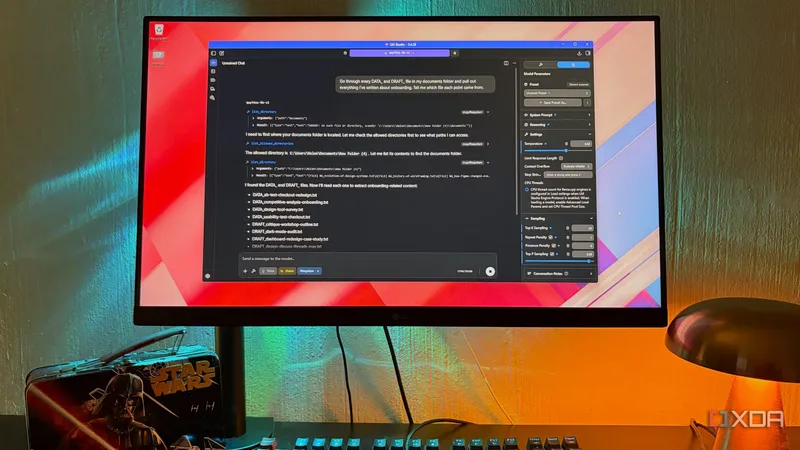
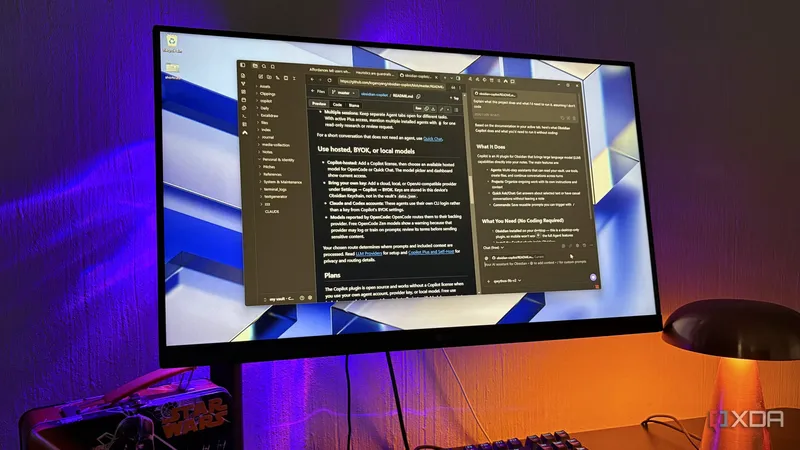
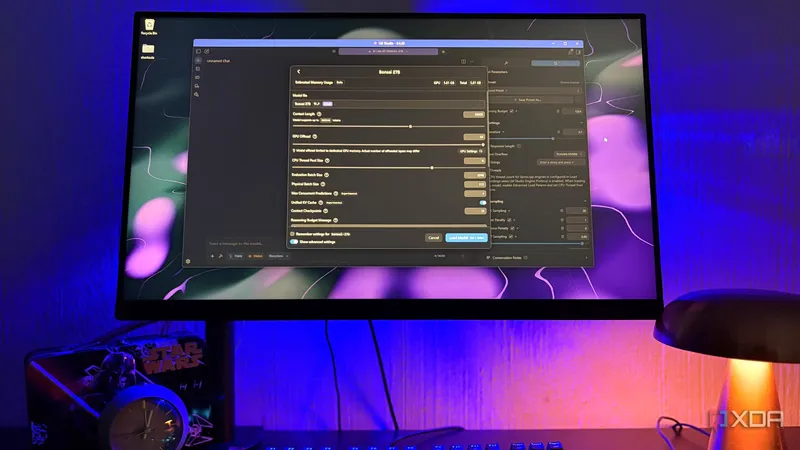
I gave my local AI model access to my personal documents, and it finally became more useful than a chatbot

AI-generated summary XDA reports that running a local large language model with access to personal folders and documents can make the technology more useful than standard chatbots while keeping files private. The author uses apps like LM Studio, Cherry Studio, and AnythingLLM, along with models such as Qwen 3.5 9B, to handle health, finance, and note files locally.

Ollama

AI-generated summary Ollama is an open-source platform that enables users to run large language models locally on macOS, Linux, and Windows without relying on cloud services. The software supports models such as Llama 4, Qwen 3, Gemma 3, Phi-4, DeepSeek-R1, and Mistral, and allows customization through a Modelfile.

KORA builds AI models and agents into a new Linux OS bound for Qualcomm Snapdragon PCs

AI-generated summary KORA Systems Inc. has unveiled a new Linux-based operating system designed to integrate artificial intelligence models and agents directly into the system architecture while Qualcomm Technologies Inc. collaborated with the company to bring the software to personal computers powered by Snapdragon processors. The system utilizes an inference engine called Cortex to distribute AI workloads across the central processor, graphics processor, and neural processing unit, allowing devices equipped with Snapdragon X2 Elite chips to run a 26 billion-parameter language model locally.

Also covered by WIRED Unite.AI

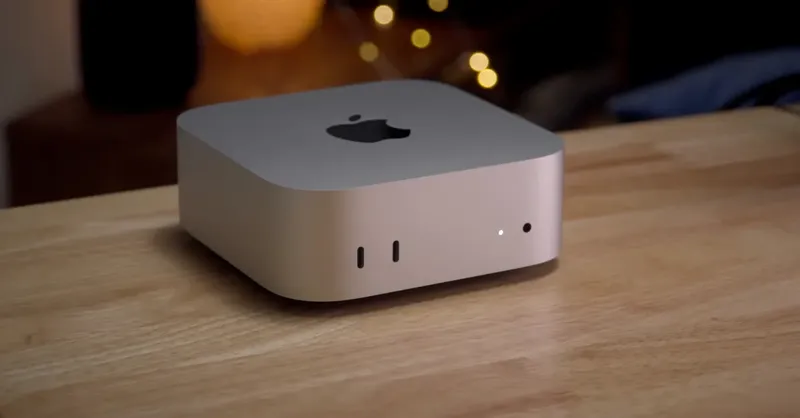
Going deep on local AI performance benchmarking with Apple’s Mac Studio with M5 Ultra taking on Nvidia DGX Spark — inference engine recipes mandatory for bigger models as MLX stack matures

AI-generated summary Apple’s updated Mac Studio with the M5 Ultra SoC features an 80-core GPU and options for up to 512GB of unified memory for local artificial intelligence tasks. In testing against Nvidia DGX Spark and Dell Pro Precision GB10 systems, the Mac Studio was evaluated using models such as Qwen 3.8 27B, GLM-5.3 Flash, and DeepSeek V4.1 Flash 1017.

Monday 9 November

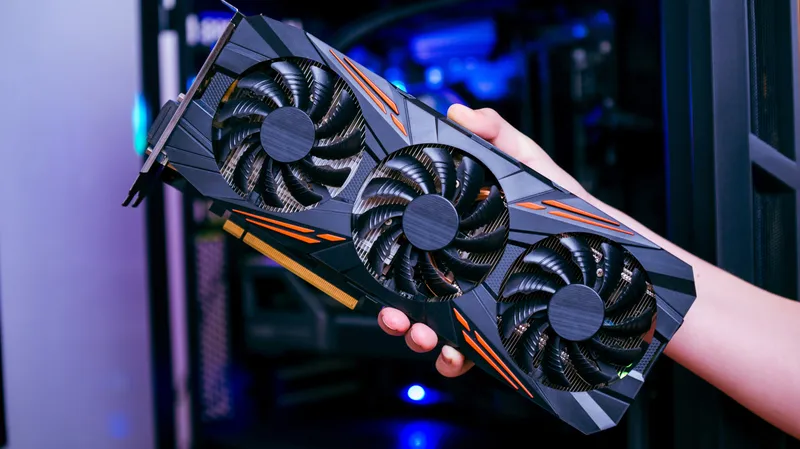
A used RTX 3090 is still the best GPU for local AI, and it beats most new cards on value

AI-generated summary The Nvidia GeForce RTX 3090 offers 24 GB of VRAM, making it a capable hardware choice for running local large language models and other AI workloads. While the Nvidia GeForce RTX 3090 is no longer in production, it provides an alternative for users seeking memory capacity comparable to newer cards like the RTX 5070 Ti, RTX 5080, and RTX 5090.

Apple’s $2,899 MacBook PROLED hides a massive unified memory bottleneck — why I think power users should abandon macOS for Nvidia RTX Spark and AMD Strix Halo

AI-generated summary The author argues that Apple designed the 2,899 dollar MacBook PROLED as a luxury device with a unified memory bottleneck rather than a computer built for local artificial intelligence. The reviewer suggests that power users focused on local workloads should instead consider Windows alternatives featuring Nvidia RTX Spark and AMD Strix Halo chips.

Sunday 8 November