
Truncated: latest AI news

Tuesday 3 November

Gemini 4 Carbon: our next frontier model

AI-generated summary Google previews Gemini 4 Carbon as its strongest frontier model with capabilities for cybersecurity and long-horizon engineering. Google says the model starts testing with a subset of cyber defenders and trusted partners through the Fairwind Program.

Also covered by @GoogleDeepMind @sundarpichai @OfficialLoganK
+12 more@arena SiliconANGLE Ars Technica The Verge CNET Engadget Help Net Security The Decoder AI Business @AravSrinivas Cyber Security News Tom's Hardware

Investors increasingly nervous over AI bubble

AI-generated summary Investors voiced growing worry regarding potential market outcomes surrounding artificial intelligence while Alphabet, Meta, and Oracle issued or planned new bonds amid rising interest rates. Institutional investors urged Anthropic to lower its initial public offering valuation target as the company expects to spend nearly nine hundred billion dollars on infrastructure.

Earlier: Meta (META) euro and dollar bond sale: what it owes

Big four hyperscalers raising more that $131 billion in debt and equity for AI buildout

AI-generated summary Amazon, Google, Microsoft, and Oracle announced funding plans to raise more than $131 billion in debt and equity for artificial intelligence infrastructure. Amazon disclosed an $80 billion loan facility and Microsoft stated it intends to use net proceeds from a bond offering for general corporate purposes.

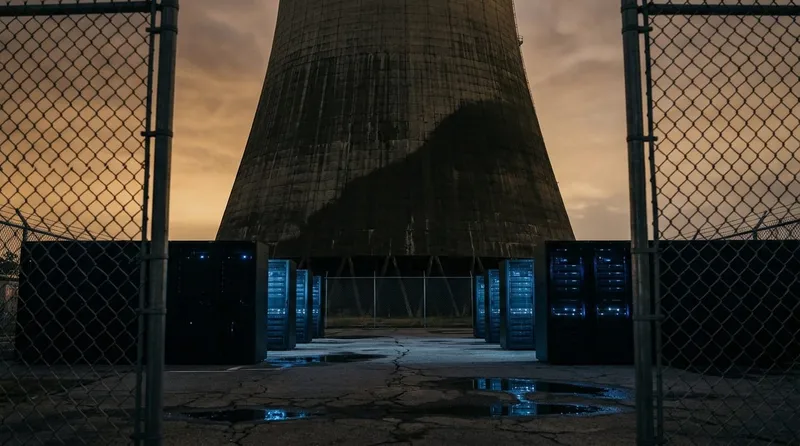
Brookfield Bets £20B on AI Data Center at UK Power Station

A vast concrete cooling tower looms against a bruised amber sky at dusk, its weathered industrial surface streaked with moisture, as rows of humming black server racks visible through a

AI-generated summary Drax Group, Brookfield Asset Management, and Radiant announced an agreement to jointly develop a gigawatt-scale AI data center on the Drax Power Station estate in North Yorkshire, England. Brookfield projects that total investment could exceed twenty billion pounds, with Phase 1 committing two and a half billion pounds for up to one hundred megawatts of capacity.

Also covered by the Guardian

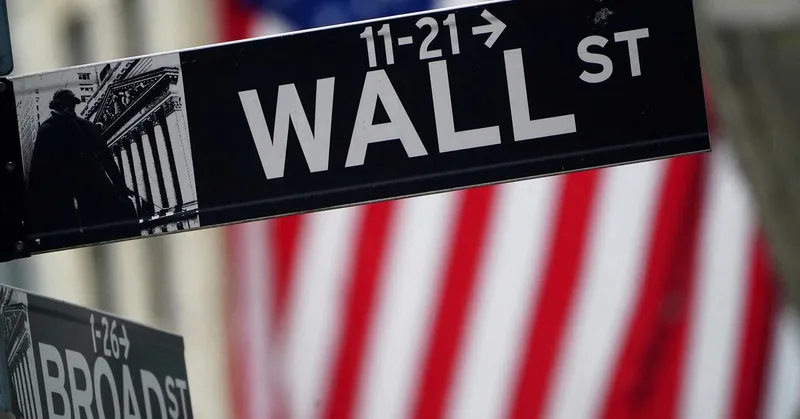
Three warning signs the tech selloff isn't over as Wall Street sentiment hangs by a thread

AI-generated summary Wall Street sentiment is facing pressure as concerns over artificial intelligence spending grow among investors. Semiconductor stocks have declined significantly while companies like Amazon, Alphabet, and Meta continue to invest heavily in artificial intelligence infrastructure.

Earlier: These tech stocks got unfairly swept up in last week’s selloff, analysts say · Tech stocks are suffering their biggest selloff since Covid, as investors see premature end to AI datacenter boom

How AI firms OpenAI, Anthropic are monitoring Election Day misuse

AI-generated summary Artificial intelligence firms including OpenAI and Anthropic are monitoring Election Day misuse and managing the expected flurry of information online. OpenAI and Anthropic are partnering with Democracy Works and hosting war rooms to help ensure users receive accurate voting details.

Also covered by The New York Times
Earlier: Behind the Curtain: OpenAI's post-election power play

Three midterm tests of AI's political influence

AI-generated summary The 2026 midterms will test voter sentiment on the artificial intelligence race and whether campaigning on artificial intelligence regulation or aligning with Elon Musk is a winning strategy. In the Michigan Senate race, El-Sayed has proposed a new cabinet-level federal agency to regulate artificial intelligence and a ban on super intelligence while targeting Mike Rogers over Musk-affiliated political spending.

Stolen AI access leaves companies with cloud bills of up to $1 million

AI-generated summary Google Threat Intelligence Group and Mandiant researchers have available findings showing that criminals break into corporate cloud accounts to run AI models at the victim's expense. Mandiant states that some attacks resulted in bills reaching up to $1 million before the attackers lost access.

Also covered by Cyber Security News

MIT Researchers Say Privacy Rules Will Shape AI Competition

AI-generated summary MIT Sloan researchers Catherine Tucker and Rozhina Ghanavi released a research paper exploring how privacy rules will shape artificial intelligence competition and corporate consolidation. The researchers state that restrictions on training, inference, and sharing affect developers seeking realistic interactions to improve their products while favoring established firms.