Models & Research

Artificial intelligence models and research encompass the foundational algorithms, architectures, and scientific studies that drive system capabilities. Truncated covers new model releases, underlying technical advances, and published research papers.

Yesterday · Tue 10 Nov

Anthropic's new Claude Fable and Mythos models deliver momentum ahead of IPO

AI-generated summary Anthropic has released the Claude Fable 5.2 and Mythos 5.2 models, bringing new artificial intelligence capabilities ahead of an expected market debut later this month. Anthropic says the new models offer faster generation speeds at a lower price, with Fable 5.2 capable of coordinating more than 1,000 agents simultaneously.

Also covered by Yahoo Finance Latent Space www.tomsguide.com

Monday 9 November

Introducing Claude Fable 5.2 and Claude Mythos 5.2

Anthropic logo

AI-generated summary Anthropic says it has upgraded Claude Fable and Claude Mythos to version 5.2, bringing improvements in coding, reasoning, and vision. Anthropic says the updated models generate outputs up to 30 percent faster than previous versions and are available at a lower price.

Also covered by @cursor_ai Unite.AI Amazon Web Services, Inc.
+13 moreWccftech MacRumors @arena lennysnewsletter.com Interesting Engineering Digital Trends Fortune Mashable The Deep View theregister Cyber Security News Help Net Security SecurityWeek

Anthropic launches Fable 5.2 with a price cut and stronger coding scores

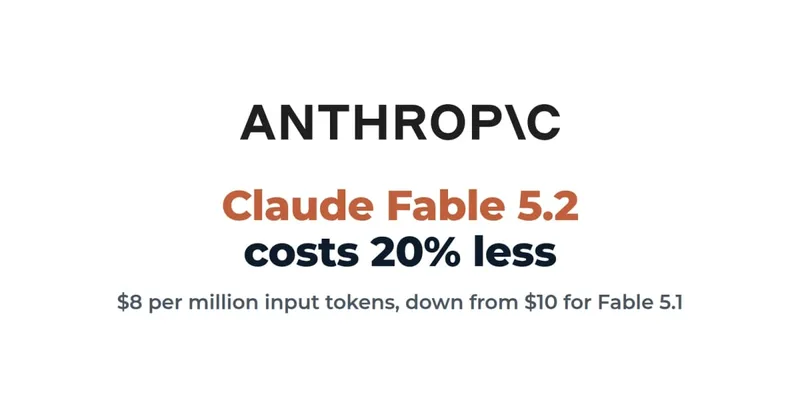
AI-generated summary Anthropic has launched Claude Fable 5.2 alongside Mythos 5.2 with a price cut from $10 and $50 to $8 and $40 per million input and output tokens. Anthropic reports that Fable 5.2 scored 49.1 percent on FrontierCode 2.0 and generated output up to 30 percent faster than the previous version.

Also covered by Investing.com oneusefulthing.org 9to5Mac
+12 more@ArtificialAnlys investingLive The Decoder VentureBeat Decrypt @arena SiliconANGLE androidauthority.com InfoWorld CSO Online Computerworld Wccftech

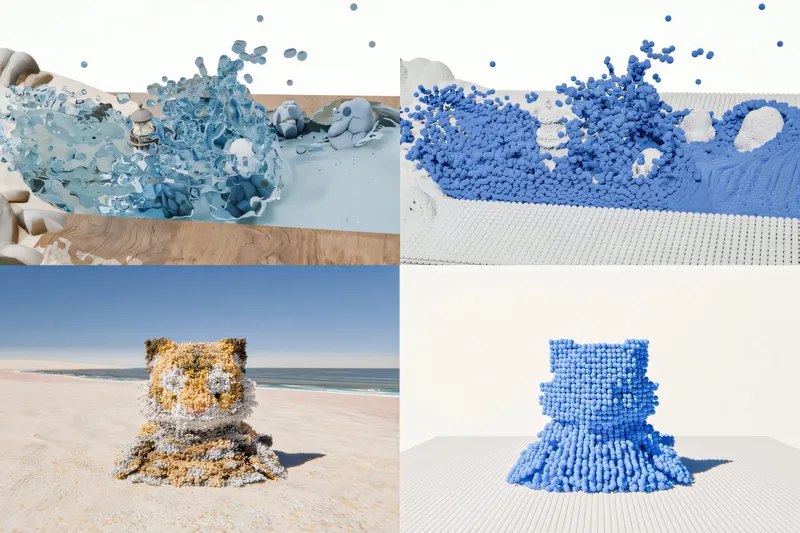
A single AI model simulates the behavior of many substances, from sliding sand to folding proteins

AI-generated summary Researchers at MIT, the University of British Columbia, and other institutions developed a single deep-learning system named WorldParticle to simulate physical processes like sliding sand and folding proteins. The system represents simulated materials as tiny particles and predicts their movement step by step, allowing engineers to model multiple physical phenomena with one unified architecture.