
AI News, 14 November 2026

Saturday 14 November

Prompt Injection Detection Software: What Businesses Should Look For

Prompt Injection Detection Software: What Businesses Should Look For

AI-generated summary BlackFog reports that ADX Vision 2.0 monitors prompts sent to artificial intelligence tools to identify potentially malicious instructions and prevent data exposure across Windows and macOS devices. BlackFog states that ADX Vision 2.0 deploys with a lightweight agent on the endpoint to inspect prompts before they reach an artificial intelligence service.

Prohibited AI Practices under the AI Act

AI-generated summary Eight categories of AI practices have been banned in the EU since 2 February 2025 because they pose unacceptable risks to fundamental rights and Union values while the European Commission has published Guidelines on prohibited AI practices to explain how the Commission interprets the original eight prohibitions set out in Article 5 of the AI Act. The Digital Omnibus added two further prohibitions in 2026 applying from 2 December 2026 and breaching these prohibitions can attract the highest fines available under the AI Act reaching up to €35 million or 7 percent of an undertaking's total worldwide annual turnover whichever is higher.

Understanding Indirect Prompt Injection Attacks: How They Work And Real Business Risks

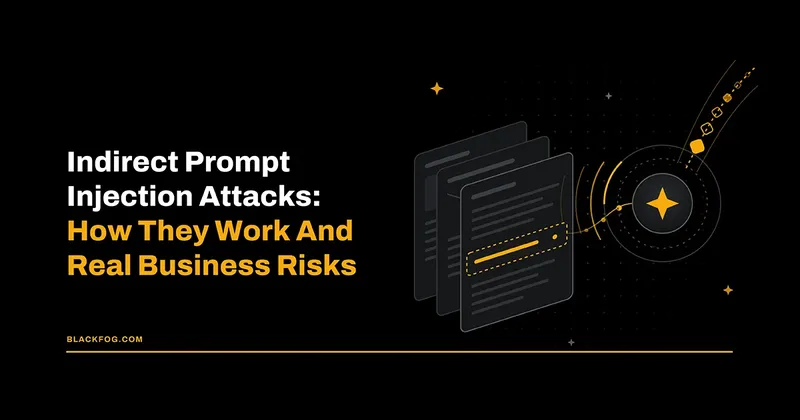
Indirect Prompt Injection Attacks: How They Work And Real Business Risks

AI-generated summary BlackFog reports that indirect prompt injection allows attackers to hide malicious instructions inside external content like emails or documents so that an AI model follows them as commands. OWASP ranks prompt injection as the leading security risk for large language models because models cannot reliably separate trusted instructions from untrusted data.

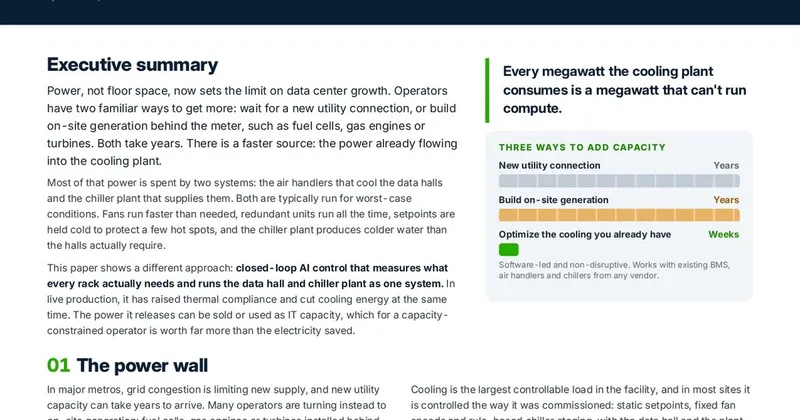
Turning cooling into compute

AI-generated summary Data centers face power constraints as demand for artificial intelligence workloads grows, and a Vigilent whitepaper explores optimizing existing cooling infrastructure with artificial intelligence to reduce energy consumption and release power. The paper examines data hall optimization, chiller plant efficiency, and unified artificial intelligence control while stating that optimizing cooling infrastructure could free approximately 6 megawatts of power for compute in a modeled 100 megawatt IT facility.

UK Finance Bill 2026-27 Would Let HMRC Demand Your AI Chatbot History

A close-up shot of a laptop keyboard under cold fluorescent office light, its screen casting a pale blue glow across stacked manila tax folders and a printed government form, with a

AI-generated summary The UK government published draft legislation for the Finance Bill 2026-27 that would expand HMRC information powers from computer records to any relevant thing. Tax advisers state that the new wording is broad enough to allow HMRC to demand prompt histories and conversation logs from AI tools such as ChatGPT, Microsoft Copilot, and Claude.

Also covered byReclaim The Net: Free Speech, Privacy, Digital Rights

U.S. Treasury Secretary questions whether Nvidia knowingly sold AI GPUs to shell companies, says company itself is responsible — ‘I think it is important that anyone at the company there be held accountable for that’

AI-generated summary U.S. Treasury Secretary Scott Bessent questioned whether Nvidia knew if it sold AI GPUs to shell companies while admitting that export controls cannot stop all restricted hardware from reaching China. Scott Bessent called for accountability at Nvidia and criticized general counsel Timothy Teter while stating it remains unclear if chief executive Jensen Huang had knowledge of the potentially illicit sales.

Earlier: