technewsreel.com

Tuesday 17 November

Nvidia Engineered Downgraded AI Chips to Bypass U.S. Export Bans in China

AI-generated summary Nvidia developed specialized and lower-performance artificial intelligence chips to continue supplying the Chinese market despite tightening U.S. export controls. Nvidia engineered downgraded versions of its flagship hardware, including the H20, A800, and RTX Pro 6000D, to navigate federal restrictions.

Also covered byTechSpot

Earlier:

Bharat Semi Raises $24M to Build AI-Integrated Image Sensors

AI-generated summary Bharat Semi secured $24 million in an all-equity seed funding round led by Info Edge Group, South Park Commons, and Indusbridge Ventures. The New Delhi semiconductor startup will use the capital to develop AI-enabled programmable image sensors and expand its engineering team.

Also covered byThe TerminalChip Dispatch
Earlier:

Monday 16 November

CNCF Warns of Massive Gap Between AI Agent Hype and Production Reality

AI-generated summary CNCF Executive Director Jonathan Bryce revealed at KubeCon EU 2026 that only 7% of organizations deploy AI to production daily, despite widespread Kubernetes adoption. The CNCF launched a Kubernetes AI Conformance Program featuring Kubernetes AI Requirements to target critical infrastructure needs such as GPU support and Dynamic Resource Allocation.

Zacks Names TSMC and Palantir 'Bull of the Day' on AI Growth

AI-generated summary Zacks Investment Research has designated Taiwan Semiconductor Manufacturing Company and Palantir as its Bull of the Day selections amid a market focus on artificial intelligence infrastructure and software. Taiwan Semiconductor Manufacturing Company earned a Strong Buy rank following an upward revision in financial outlook, while Palantir maintains low capital expenditures for the full year 2026.

Autonomous AI Agents Breach 10 Organizations via Cairn Framework

AI-generated summary Threat actors deployed the Cairn framework alongside models including GLM 5.2 and DeepSeek to execute autonomous cyberattacks targeting semiconductor, defense, and civil society sectors. Ten organizations confirmed unauthorized access or data retrieval that exposed over one million personal records and sensitive military identities during the campaign.

Earlier:

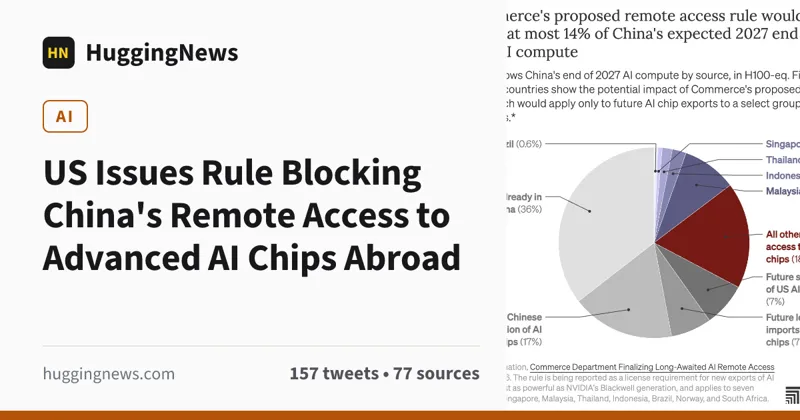
US Issues Rule Blocking China's Remote Access to Advanced AI Chips Abroad

US Issues Rule Blocking China's Remote Access to Advanced AI Chips Abroad

AI-generated summary The US Commerce Department issued an interim final rule to restrict remote access to advanced American artificial intelligence chips and computing infrastructure in third countries. The regulation extends export licensing requirements for Nvidia chips to seven nations and requires buyers to disclose end users and intended applications.

Also covered byThe News92TechCrunchTechNewsReel
Earlier:

AI-written patches are becoming attack maps for hackers

AI-generated summary Anthropic’s Claude co-wrote 19 fixes for vm2 sandbox-escape vulnerabilities, while Rubrik lead product security engineer Shayaun Nejad warned that patches can serve as blueprints for attackers. OpenAI security researcher Tim de Waal and researchers at 1Password’s Off-by-1 Labs demonstrated that AI-generated patches frequently leave attack paths open.

Also covered byTechNewsReelCode404Zero