
gridthegrey.com · Sun 15 Nov

Sunday 15 November

OpenAI Control Room: stopping research workloads
OpenAI Control Room: stopping research workloads

AI-generated summary OpenAI disclosed Control Room on November 9, 2026, describing a system deployed across its internal research infrastructure to stop jobs from receiving further model output. OpenAI reports a maximum delay of 35 seconds between Control Room receiving a stop instruction and blocking further progress through model output.

Also covered byGRID THE GREY

Earlier:

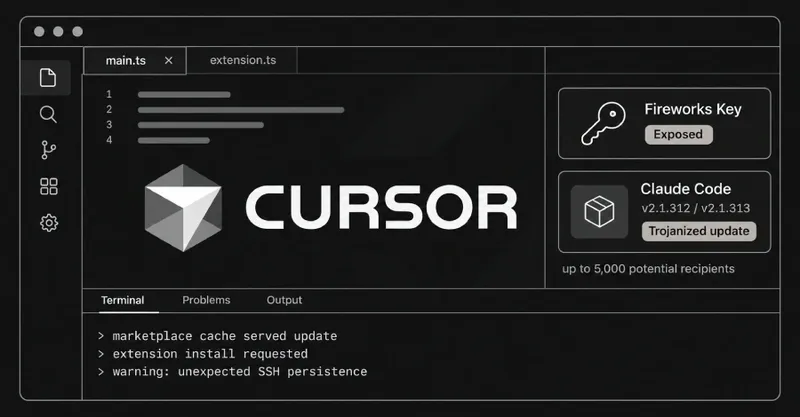
Cursor Says Stolen Fireworks AI Key Led to Trojanized Claude Code Extension Incident

AI-generated summary Cursor stated that an attacker obtained an access key issued to Fireworks AI and used it to copy data from a read-only storage bucket. The coding platform reported that the attacker used exposed credentials from the data to place trojanized versions of Anthropic's Claude Code extension on the extension marketplace cache.

Also covered byGazeWireWeb PulseGRID THE GREY
Earlier:

Cairn AI Framework Hits Semiconductor and Defense Orgs

AI-generated summary Palo Alto Unit 42 reports that the Chinese-speaking threat cluster designated CL-STA-1238 used the open-source Cairn framework in twenty-five autonomous offensive cyber operations targeting semiconductor and defense organizations. The campaign relied on Zhipu GLM and DeepSeek models to drive agent workers through a shared blackboard architecture, successfully achieving unauthorized access or data retrieval at ten targets.

TypoPrompting: 186 Fake AI Domains Spread ClickFix Malware

AI-generated summary Cybersecurity researchers at Island have identified a campaign codenamed TypoPrompting that uses 186 bogus domains impersonating 27 AI brands to distribute malware. The campaign utilizes three delivery pathways including a ClickFix lure, Net Guard browser hijacker, and rogue Chrome extensions.

Also covered byWeb Pulse
Earlier:

Google Project Zero Cuts Disclosure Window as LLMs Speed Up Exploits

AI-generated summary Google Project Zero announced a fundamental revision to its vulnerability disclosure policy due to the impact of large language models on the attacker threat landscape. The policy transitions from a 90-day window down to 60 days in February 2027 and 30 days by January 2028.

Also covered bynews.lavx.huHIMIAO Horizontechailatest.news