
toolmindsai.com · Mon 16 Nov

Monday 16 November

Meta’s Muse Ember Bets the Future of AI Agents on Cheap, Reliable Work

AI-generated summary TechCrunch reported on Meta releasing Muse Ember, a lightweight multimodal model built for repetitive agent work including tool calls, coding subtasks, routing, extraction, and long-document parsing. Meta states that Muse Ember is priced at $0.10 per million input tokens and $0.50 per million output tokens for workloads dominated by repeated and relatively narrow tasks.

Also covered byTool Minds AI

Earlier:

Gemini in Google Forms Explained: Turn Survey Responses Into Smart Insights

Gemini in Google Forms survey being filled in on a laptop

AI-generated summary Google announced a new tool named Actionable Insights for Gemini in Google Forms on 5 November 2026 to generate written reports from survey responses. Google says Gemini calculates counts, percentages and comparisons by writing and running Python code against the response data.

Earlier:

Zoho Desk Blended Agents Explained: Free AI Agents for Customer Service in 2026

Zoho Desk Blended Agents support team working together with headsets in a customer service centre

AI-generated summary Tool Minds AI reports that Zoho Desk Blended Agents launched on 16 November 2026 to let businesses on paid Zoho Desk plans build customer service AI agents without paying Zoho for the agent itself. Zoho chief executive Mani Vembu says human representatives can spend more time on situations calling for judgement and empathy while the software handles routine tasks.

Also covered bymartechseries.com

Meta Muse Spaces Explained: Talk, Build and Remember — What Meta's November Update Really Changes

Meta Muse Spaces voice assistant on a smartphone

AI-generated summary Meta launched Muse Spaces on 6 November 2026 to let users turn a single sentence into a small custom app inside the Muse assistant. Meta states that spaces can pull updates from connected third-party apps including Gmail, Google Calendar, OpenTable and Notion.

Earlier:

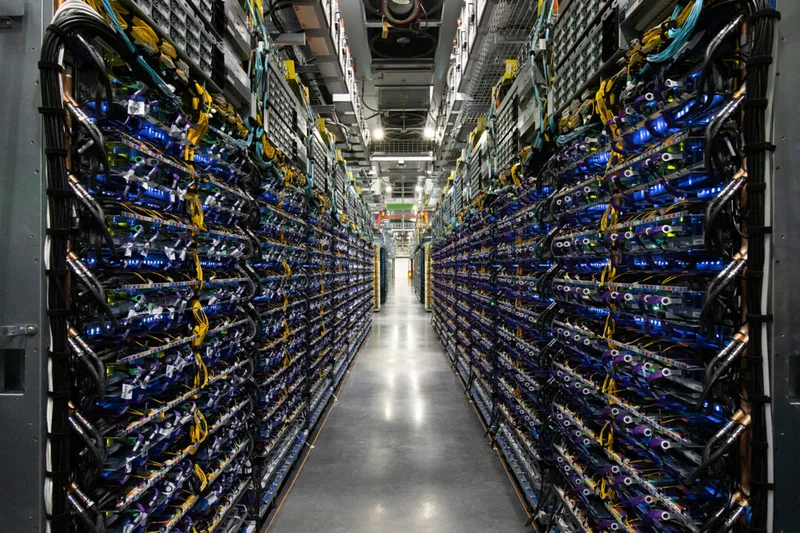
Google TPU 8tx and TPU 8i Max Explained: Confidential AI and Massive Context Windows

Google TPU 8tx

AI-generated summary Google announced the Google TPU 8tx and TPU 8i Max systems on 9 November 2026 to expand its eighth-generation TPU portfolio to four systems in a single year. Google TPU 8tx uses silicon from the TPU 8t training chip paired with host processors to provide secure and confidential inference.

Also covered byCognativ
Earlier: