
AI News, 17 November 2026

Tuesday 17 November

Google finds AI agent writing and launching exploits with no human in the loop

AI-generated summary Google Threat Intelligence Group and Mandiant reported that threat actors have begun using AI agents to carry out whole stages of live intrusions without human involvement. Google analysts observed operators using open source agentic pentesting frameworks including ARTEX, CAIRN, CyberStrikeAI, PentAGI, and HexStrike AI during their intrusions.


Also covered byCointelegraphAIoozetechailatest.news

Nvidia warns chip buyers of legal risks under proposed US remote-access law

Nvidia CEO Jensen Huang gesturing in front of Nvidia and CES logos

AI-generated summary Nvidia warned chip buyers about potential legal risks under the proposed Remote Access Security Act if Chinese companies obtain remote access to its AI chips. Nvidia has ruled out chip sales to customers that lease more than 50% of their graphics processing units to Chinese companies.

Also covered byChip Dispatchwebainews.comPivot News
Earlier:

South Korean court administration exam faces AI‑glasses cheating allegations

Source-provided image accompanying South Korean court administration exam faces AI‑glasses cheating allegations

AI-generated summary Online community board posts raised suspicions that candidates for the Grade 9 court administration exam used AI enabled glasses to cheat. The posts alleged that high scores achieved during the June 20, 2026, exam were physically impossible without assistance.

Also covered byNikkei Asia
Earlier:

Germany AI Asylum Law Draft Leans on Staff Training That Review Says Cannot Stop Automation Bias

AI

AI-generated summary Germany has drafted an artificial intelligence migration administration law known as the KIMVG that relies on staff training and manual reviews as safeguards. AlgorithmWatch and other civil society organizations published an appeal asking the Bundestag to rework the bill because a review indicates training cannot prevent automation bias.

Also covered byFusion42

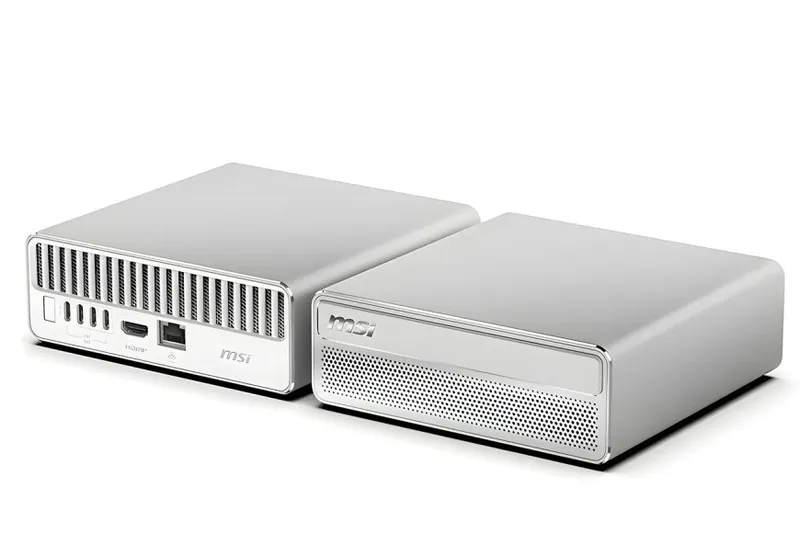
MSI EdgeMesa N AI+ Costs $4,699 — and $7,999 for the 128GB RTX Spark Mini PC

AI-generated summary MSI has priced its EdgeMesa N AI+ mini PC built around Nvidia's RTX Spark platform at $4,699 for the 64GB memory configuration and $7,999 for the 128GB version. Notebookcheck first reported the prices on November 11, and VideoCardz and TweakTown confirmed them over the following days before the listings were taken down.

Also covered byWccftech
Earlier:

OVHcloud unveils Olala mini, France's second open AI model alongside Mistral

AI-generated summary OVHcloud unveiled Olala mini, a new open artificial intelligence model featuring 7 billion total parameters and a mixture-of-experts architecture. The model will be released on Hugging Face under the Apache 2.0 license with documentation on compliance with the EU AI Act.

Also covered byIT ProAITOPaiunderstanding.org

User builds 3D racing game in a single HTML file using Claude

SI Agent News. SI is the new AI. Two AI podcast hosts on a newspaper front page

AI-generated summary A developer utilized Claude to build a playable 3D Fiat Uno racing game that operates entirely within a single HTML file in a web browser. The developer ran Claude for over seven hours and noted that producing the game over the standard API would have cost approximately $348.

Also covered byXDA
Earlier:

inferzero: How a one-person project turns Intel laptops into AI machines

AI-generated summary The inferzero project by developer rizagp provides a low-level engine that connects directly to Intel's programming interface for the GPU to run local artificial intelligence models. Documentation and individual testers on GitHub report performance figures and speedups for reading long texts on Intel laptops, though independent testing shows mixed results compared to other backends.

DeltaVisionX: A Low-Cost Vision-Guided Automation System Using YOLOv11 and PLC-Based Actuation

DeltaVisionX: A Low-Cost Vision-Guided Automation System Using YOLOv11 and PLC-Based Actuation

AI-generated summary The paper presents DeltaVisionX, an industrial automation system combining real-time computer vision with PLC-based actuation for object classification and sorting on a conveyor belt. The system uses the YOLOv11 deep learning model trained on a custom dataset to detect objects, achieving a mean average precision of 0.97 with an inference time of 100 ms per frame.

Edge AI for Autonomous Agricultural Drone Data Processing: Onboard Real-Time MobileNetV3 Inference with RPLiDAR Sensor Fusion for Instant In-Flight Crop Health Monitoring

AI-generated summary Researchers present an Edge AI framework for agricultural drones that performs onboard real-time MobileNetV3-Large inference and RPLiDAR sensor fusion to monitor crop health during flight. The system was evaluated in the Microsoft AirSim simulation environment and achieved classification accuracies of 98.2 percent for healthy canopies, 92.5 percent for stressed canopies, and 95.8 percent for diseased canopies.

Commerce puts an AI Shopping Agent on BigCommerce storefronts, per...

Commerce puts an AI Shopping Agent on BigCommerce storefronts, per Shopifreaks

AI-generated summary Commerce has started rolling out a customizable AI assistant called Shopping Agent to eligible BigCommerce merchants ahead of the holiday season. The newsletter Shopifreaks reports that the assistant runs on a new conversational site search and gives merchants first-party data on customer inquiries.

Also covered bymartechseries.com
Earlier:

Holiday shopping in a world of fakes: How AI is changing the game

AI-generated summary Malwarebytes reports that artificial intelligence is making it easier for cybercriminals to create fake storefronts, reviews, and promotions during the holiday shopping season. According to Malwarebytes research, 77% of consumers are concerned about being scammed by a retailer using a fake AI website or misrepresenting products.

Earlier:

AI Agent Abuse Raises Risk of Privileged System Access

RealGround AI agent security architecture visual

AI-generated summary Reports describe how compromised engineers and a tampered AI coding-tool installation were used to abuse internal AI tooling and reach Binance wallet infrastructure. RealGround analysis indicates that organizations should treat agent installations, connected tools, and authorization boundaries as supply-chain and privileged-access controls.

Earlier:

Asylum AI With No Error Stats: What Germany’s BAMF Software Can Actually Prove

AI-generated summary The federal government reports that the Federal Office for Migration and Refugees has used artificial intelligence tools such as phone analysis, the DIAS system, and transliteration software since 2017. The federal government states that an error rate within the meaning of the question does not exist for these tools, while critics and researchers raise concerns about performance and testing.