
techailatest.news · Mon 16 Nov

Monday 16 November

Our first phase of embedded assessments

AI-generated summary OpenAI says it has signed agreements with four independent assessors, including Apollo Research and METR, for the first phase of embedded assessments. OpenAI says the collaborations involve independent experts receiving deep access to internal models and systems to assess alignment and safeguards.

Also covered byGreg Brockman (@gdb)DigIntoAItechailatest.news
Earlier:

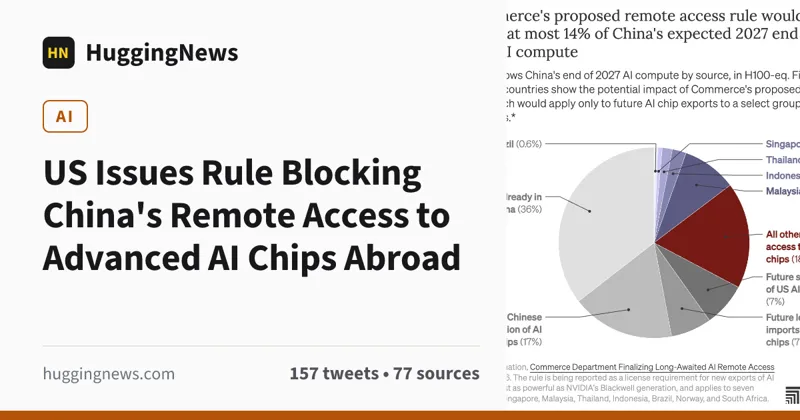
US Issues Rule Blocking China's Remote Access to Advanced AI Chips Abroad

US Issues Rule Blocking China's Remote Access to Advanced AI Chips Abroad

AI-generated summary The US Commerce Department issued an interim final rule to restrict remote access to advanced American artificial intelligence chips and computing infrastructure in third countries. The regulation extends export licensing requirements for Nvidia chips to seven nations and requires buyers to disclose end users and intended applications.

Also covered byThe News92TechCrunchtechailatest.news
Earlier:

Can AI agents buy things for you? ChatGPT Wallet, Visa and United's ban in November 2026

Abstract illustration of an agent hub linked to surrounding tasks

AI-generated summary OpenAI launched ChatGPT Wallet on 13 November 2026 for United States Pro subscribers to let agents buy on merchant sites using a token per purchase and biometric approval. United Airlines added a rule on 11 November 2026 to its contract of carriage to ban AI agents from booking tickets while card networks and AI labs build new payment rails.

Also covered bySI Agent Newselseif
Earlier:

TSMC approves up to $1 billion for stakes in OpenAI and Anthropic before Anthropic's IPO

Abstract illustration of rising bars and a growth line

AI-generated summary TSMC says its board approved investments of up to $500 million in Anthropic common shares and up to $500 million in OpenAI preferred stock. Anthropic filings list TSMC Partners among seven buyers in a private placement that closes after the initial public offering.

Earlier:

AI uncovers flaws in discontinued devices with no vendor left to patch them

AI-generated summary Forescout researchers built a tool using Claude models to test if generally available AI models could find security flaws on a limited budget. The team confirmed 99 vulnerabilities across 10 TCP/IP stacks, affecting industrial equipment, medical devices, network equipment and other connected products.

Also covered bytechailatest.news