
scienmag.com

Tuesday 17 November

Abdominal CT Radiomics Identifies Prevalent Heart Disease in Type 2
AI-generated summary Researchers evaluated a hybrid analytical model combining pancreatic and aortic radiomic features from routine non-contrast abdominal computed tomography with clinical factors for patients with type 2 diabetes mellitus. The retrospective study examined 407 patients to assess whether the integrated clinical-radiomic tool improves the identification of prevalent coronary heart disease.

Also covered byBIOENGINEER.ORG

Affect-Aware Framework May Improve Relational Grounding in LLM

AI-generated summary A study published in the Journal of Ambient Intelligence and Humanized Computing describes a framework called Empathic Extended Prompting that incorporates real-time facial affective descriptors into Large Language Models. The research team evaluated this approach through a study involving 20 participants and observed that the affect-aware condition was favored in forced-choice preferences without reducing system usability.

Sunday 15 November

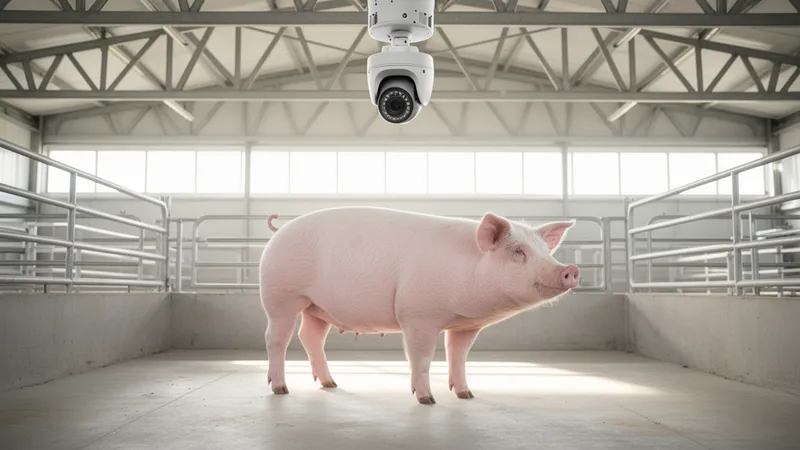
Self-Supervised Vision Model Estimates Live Pig Weight Within Three

AI-generated summary Agricultural engineers and animal scientists developed an automated dual-stream computer vision framework named DINOv3-DFR that estimates the live body weight of finishing pigs from top-down overhead visual and spatial imagery. Tested on thousands of paired colour and depth image pairs collected in commercial housing, the system achieved a mean absolute error of 2.96 kilograms and a coefficient of determination of 0.927.

Also covered byScience

Split-Parameter Federated Learning Detects Cyber Threats Across

AI-generated summary Researchers Sunil Kumar Yadav, Vivek Kumar Verma, and Vivek Bhardwaj introduced a split-parameter federated learning architecture to detect cyber threats across heterogeneous security infrastructures. The approach uses domain-specific encoders and a shared classification head to enable collaborative pattern discovery while maintaining data locality across enterprise, industrial, and device environments.

Saturday 14 November

Super-Resolution MRI Enhances Preoperative Prediction of Cervical Cancer

AI-generated summary Researchers applied a deep learning framework using three-dimensional super-resolution reconstruction to magnetic resonance imaging data from cervical cancer patients. The investigation demonstrated that the artificial intelligence pipeline enhanced radiomic modeling and improved the preoperative identification of lymphovascular space invasion.

Also covered byBIOENGINEER.ORG

Medical Students Widely Use AI Despite Training and Governance Gaps

AI-generated summary A study conducted at the University of Birmingham reports near-universal adoption of generative artificial intelligence among surveyed medical and health science students alongside widespread gaps in formal training. The investigation also revealed that five evaluated United Kingdom universities lack environmental sustainability considerations in their artificial intelligence governance policies.