byteiota.com · Sun 15 Nov

Sunday 15 November

Stanford Memorilla: Latent Memory for Frozen LLMs

Stanford Memorilla: Latent Memory for Frozen LLMs

AI-generated summary Researchers from Stanford University and partner institutions open-sourced Memorilla, an architecture designed to provide frozen large language models with persistent access to extensive document collections. Evaluations on hardware including NVIDIA H100 and B200 GPUs demonstrated that the system compresses context while maintaining stable latency across expanded corpora.

Also covered bybyteiota | From Bits to Bytes

Earlier:

llama.cpp 1.0 gives local-AI integrations a compatibility signal, not a painless upgrade

AI-generated summary The llama.cpp project reached version 1.0 on November 13 with a new rule that a breaking change to its public C API should require a new major version. Homebrew listed llama.cpp 1.0.0 as its stable formula on November 15, while Debian unstable still listed version 0.9.0.

Also covered bybyteiota | From Bits to Byteselseif
Earlier:

AI Code Open Source Debate: Copyright vs HN

Should AI-Generated Code Be Open Source? What US Law Actually Says

AI-generated summary Developer Jakub Jankiewicz argued in an essay that code produced with artificial intelligence help should default to open source or CC0. The essay prompted discussions on Hacker News about training data, copyrightability, and ethics among practitioners.

Also covered byIntelligent ArtifactYESODIbyteiota | From Bits to Bytes

Google Antigravity Orchestrator: Two Models, 24% Less Quota

AI-generated summary Google shipped Orchestrator for Antigravity on November 12 to automatically route work between Gemini 4 Carbon and Hydrogen within a single coding task. Google benchmarked Orchestrator on Terminal-Bench 4.1, recording 24 percent less quota consumed and 19 percent faster completion.

Earlier:

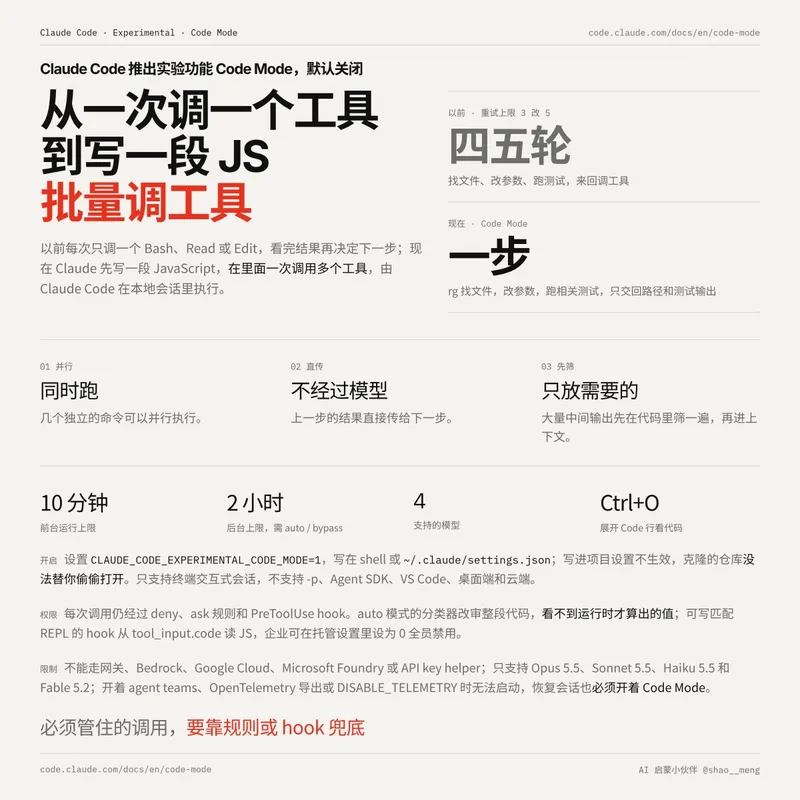
Claude Code adds Code Mode for JavaScript-based batch tool calls

AI-generated summary Anthropic has added an experimental feature called Code Mode to Claude Code that enables JavaScript-based batch tool calls. The feature requires manual configuration and includes limitations regarding supported models, gateways, and session environments.

Also covered bybyteiota | From Bits to BytesCrazycodersLab
Earlier:

Gemini Robotics 2.5 Runs Humanoids on a Mercedes Line

AI-generated summary Google DeepMind announced that Apollo 2 humanoid robots running on Gemini Robotics 2.5 achieved a 96 percent success rate sorting metal parts on an active Mercedes-Benz assembly line. During development, Google used Gemini 4 Argon as a simulation engine to generate thousands of domain-randomized training episodes from a single RGB photograph of a physical workspace.

Also covered byaiunderstanding.orgRobotics & Automation News
Earlier: