

byteiota.com

Sunday 15 November

Stanford Memorilla: Latent Memory for Frozen LLMs

Stanford Memorilla: Latent Memory for Frozen LLMs

AI-generated summary Researchers from Stanford University and partner institutions open-sourced Memorilla, an architecture designed to provide frozen large language models with persistent access to extensive document collections. Evaluations on hardware including NVIDIA H100 and B200 GPUs demonstrated that the system compresses context while maintaining stable latency across expanded corpora.

Also covered bybyteiota | From Bits to Bytes
Earlier:

llama.cpp 1.0 gives local-AI integrations a compatibility signal, not a painless upgrade

AI-generated summary The llama.cpp project reached version 1.0 on November 13 with a new rule that a breaking change to its public C API should require a new major version. Homebrew listed llama.cpp 1.0.0 as its stable formula on November 15, while Debian unstable still listed version 0.9.0.

Also covered bybyteiota | From Bits to Byteselseif
Earlier:

AI Code Open Source Debate: Copyright vs HN

Should AI-Generated Code Be Open Source? What US Law Actually Says

AI-generated summary Developer Jakub Jankiewicz argued in an essay that code produced with artificial intelligence help should default to open source or CC0. The essay prompted discussions on Hacker News about training data, copyrightability, and ethics among practitioners.

Also covered byIntelligent ArtifactYESODIbyteiota | From Bits to Bytes

Google Antigravity Orchestrator: Two Models, 24% Less Quota

AI-generated summary Google shipped Orchestrator for Antigravity on November 12 to automatically route work between Gemini 4 Carbon and Hydrogen within a single coding task. Google benchmarked Orchestrator on Terminal-Bench 4.1, recording 24 percent less quota consumed and 19 percent faster completion.

Earlier:

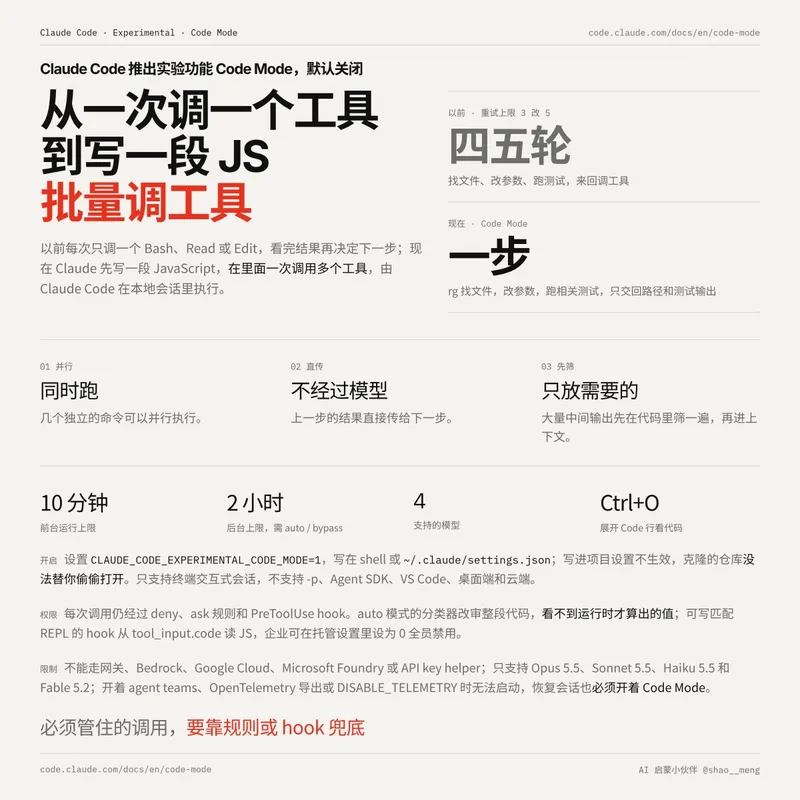
Claude Code adds Code Mode for JavaScript-based batch tool calls

AI-generated summary Anthropic has added an experimental feature called Code Mode to Claude Code that enables JavaScript-based batch tool calls. The feature requires manual configuration and includes limitations regarding supported models, gateways, and session environments.

Also covered bybyteiota | From Bits to BytesCrazycodersLab
Earlier:

Gemini Robotics 2.5 Runs Humanoids on a Mercedes Line

AI-generated summary Google DeepMind announced that Apollo 2 humanoid robots running on Gemini Robotics 2.5 achieved a 96 percent success rate sorting metal parts on an active Mercedes-Benz assembly line. During development, Google used Gemini 4 Argon as a simulation engine to generate thousands of domain-randomized training episodes from a single RGB photograph of a physical workspace.

Also covered byaiunderstanding.orgRobotics & Automation News
Earlier:

Saturday 14 November

AMD MEXT: AI Flash Tiering Cuts Server DRAM Costs by 83%

AI-generated summary AMD has introduced MEXT, a predictive memory software layer designed to let EPYC servers operate at half their DRAM capacity while maintaining baseline performance. AMD reports that internal deployments across 145 servers achieved an 83 percent reduction in memory expansion costs and avoided significant DRAM purchases.

Earlier:

Show HN: LetThemBuild – Claude Code, Codex, Gemini and OpenRouter in Parallel

AI-generated summary LetThemBuild is a desktop application that integrates Claude Code, Codex, Gemini, and OpenRouter to run development tasks in parallel using a lead model and reviewers. The software operates within a git worktree on macOS, Windows, or Linux and allows users to monitor and steer tasks from the Mac, web, or iPhone.

Also covered bybyteiota | From Bits to Bytes

Integrating Google’s Gemini Decision API: Faster, Lower‑Cost Bounded Choices for AI Workloads

AI-generated summary Google released the Gemini Decisions API featuring the Gemini Decision 1 model to evaluate predefined options in a single pass without generating text. Google reports that the new model delivers sub-250 ms latency and token-only pricing while already using it internally for detecting potentially adversarial behavior in Search.

Also covered bybyteiota | From Bits to Bytes
Earlier:

AI Pentesting Orchestrators: ARTEX’s Ban Created 50 New Tools

AI-generated summary Google Cloud Threat Intelligence classifies AI pentesting orchestrators as a distinct threat category following the creation of fifty new tools after the removal of ARTEX. Cloudflare reports a thirtyfold increase in daily automated requests against its customers while GitGuardian documents how agents query public repositories for secrets.

Earlier:

Claude Fable 5.2 reduces safeguard blocks, speeds up multi‑turn coding, and lowers token pricing

AI-generated summary Anthropic introduces Claude Fable 5.2 with a reported 55 percent drop in overall safeguard blocks and up to a 60 percent reduction in cybersecurity-related prompts compared with the previous version. The new model features token pricing reduced by 20 percent and token generation speeds running up to 30 percent faster than Claude Fable 5.1.

Also covered bybyteiota | From Bits to Bytes

Earlier:

Netflix’s Observability Knowledge Graph Cuts 4-Hour Incidents

AI-generated summary Netflix built an observability knowledge graph and an agentic root-cause analysis system named AutoRCA to address slow incident investigations across multiple tools. Netflix reports that large language models are used throughout the pipeline for tasks such as summarization and hypothesis generation under strict type system constraints.

Earlier:

ElevenLabs Scribe v3 Is Live: Three API Changes That Matter

AI-generated summary ElevenLabs held Summit NYC at Lincoln Center and launched Scribe v3 in the API. The company also announced 15 MW of NVIDIA Vera Rubin compute and various product updates.

Earlier: