
AI News, 14 November 2026

Saturday 14 November

Amazon SageMaker HyperPod's Three-Tier Data Capture Architecture

AI-generated summary Amazon SageMaker HyperPod introduces a Three-Tier Data Capture Architecture to monitor model inference traffic across three distinct points in the request path while Tier 1 handles compliance and integration with Model Monitor and Tier 2 captures traffic metadata only. Tier 3 provides payload capture for storing and analyzing actual input and output data using Amazon S3 for storage so developers can implement a model improvement flywheel by setting up a cluster and deploying models with data capture enabled.

Adobe previews 10 creative experiments at MAX 2026

Conceptual illustration of a framed mountain landscape extending through translucent image planes, with a colored contour stroke and an abstract audio waveform.

AI-generated summary Adobe previewed 10 research projects spanning video, audio, imaging and design at MAX 2026. Adobe presented the innovations as research projects without release dates, pricing or commitments to Creative Cloud.

Earlier:

SG-LegalClarify: Scale and IMDA announce benchmark

SG-LegalClarify: Scale and IMDA announce benchmark

AI-generated summary Scale AI and the Infocomm Media Development Authority introduced SG-LegalClarify to test legal reasoning and clarification abilities under Singapore law across 19 models. Scale reports that adding web search raised the average mandatory-criterion score from 53.8% to 63.0%, while recalling applicable legal rules remained a weakness.

Earlier:

Tekedia Capital Invests in Verdict Machine, A Cyber Software Factory for On-chain Finance

AI-generated summary Tekedia Capital announced its investment in Verdict Machine, an artificial intelligence cybersecurity company established by Check Point veterans to secure digital assets. The pre-seed funding round also included participants such as Y Combinator, Draper Dragon, First Peak Ventures, Gaingels, Latitude Fund, Transpose Platform, Twenty Two Ventures, and UNETI AI Labs.

ADB and South Korea Launch $20 Million K-AID Trust Fund for AI in Developing Asia-Pacific

ADB and South Korea Launch $20 Million K-AID Trust Fund for AI in Developing Asia-Pacific

AI-generated summary The Asian Development Bank and the Republic of Korea signed an agreement creating the $20 million K-AID Trust Fund to help developing economies in Asia and the Pacific use artificial intelligence. Run by the bank's Digital Sector Office, the fund will finance readiness assessments, research, pilots and project preparation in areas including health, education, agriculture and public services.

Also covered byGazeWire
Earlier:

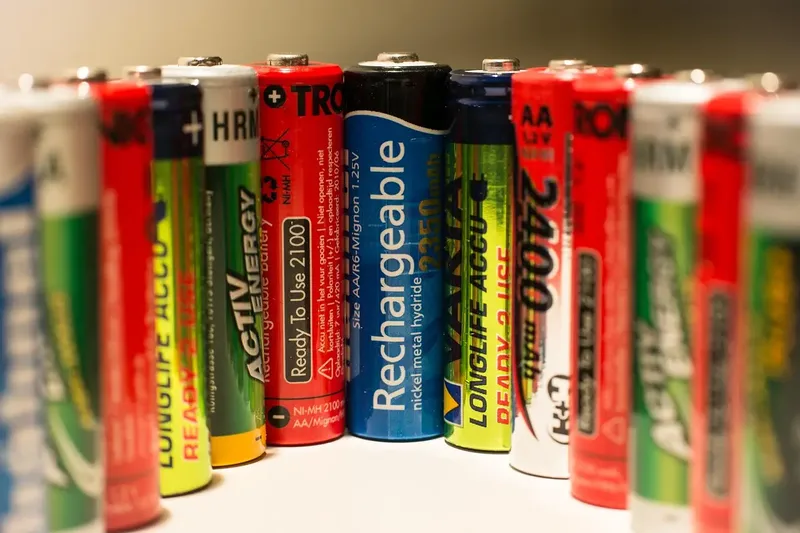
LG Energy Solution, Samsung SDI Target AI Backup Cells for 2027

AI-generated summary LG Energy Solution and Samsung SDI are targeting second-quarter 2027 mass production of cylindrical lithium iron phosphate cells for battery backup units serving AI servers. Global Info Research estimates the global artificial intelligence server battery backup unit market at approximately $349 million in 2025 and $1.862 billion by 2032.

AI Increases Code Production Speed but May Expand Software Vulnerabilities

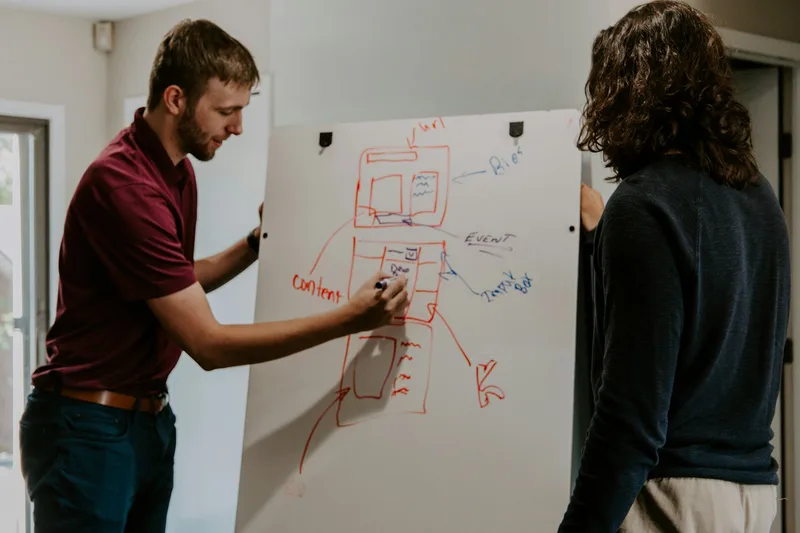
man drawing on dry-erase board

AI-generated summary Accenture and Tempest executives discussed the productivity gains and security challenges that emerge from using artificial intelligence in software development. Accenture reports productivity gains of 40% to 50% across projects, while Tempest warns that code generation without proper verification may increase security vulnerabilities.

Evolving Infra: Agent-Adaptive LLM Serving

Evolving Infra: Agent-Adaptive LLM Serving

AI-generated summary Researchers from MIT, UC Berkeley, and Georgia Tech submitted a preprint introducing an open-source inference system called Evolving Infra that dynamically adapts compute allocation and key-value cache management to multi-agent workloads. The authors evaluated Evolving Infra on NVIDIA GB300 GPUs serving GLM-5.2 and Kimi K2.6 models across coding tasks, theorem proving, and multimodal UI navigation workloads.