
news.lavx.hu

Yesterday · Thu 19 Nov

Cerebras Puts Disaggregated Inference Into Production With GPUs
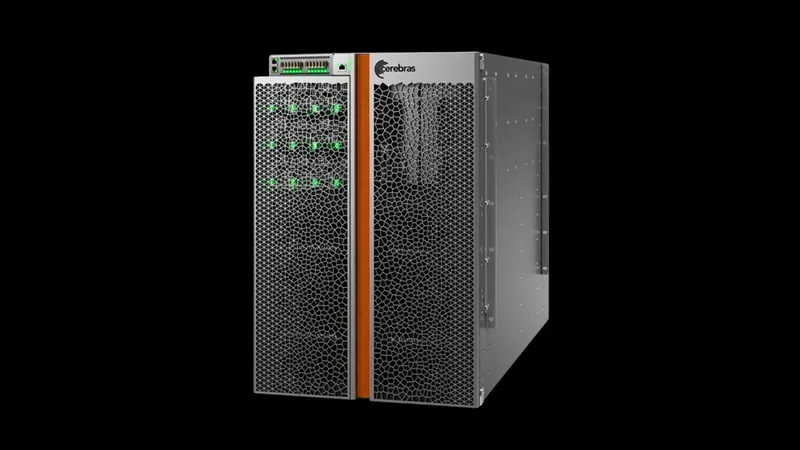
AI-generated summary Cerebras Systems reported that its production disaggregated inference deployment assigns prompt processing to AMD Instinct GPUs and response generation to CS-3 systems. The configuration delivered five times the throughput per megawatt of a CS-3-only setup without reducing token-generation speed on Cerebras Inference Cloud.

Also covered bySTIRUPnews.lavx.hu
Google splits Gemini history from training controls

Google splits Gemini history from training and keeps chats two months

AI-generated summary Google said on November 16, 2026 that it is separating Gemini chat history from generative AI model training. Google stated that users will be able to keep conversations in their chat history without using them to train generative AI models.

Also covered byRR Tech PulseTechCrunchnews.lavx.hu
Earlier:

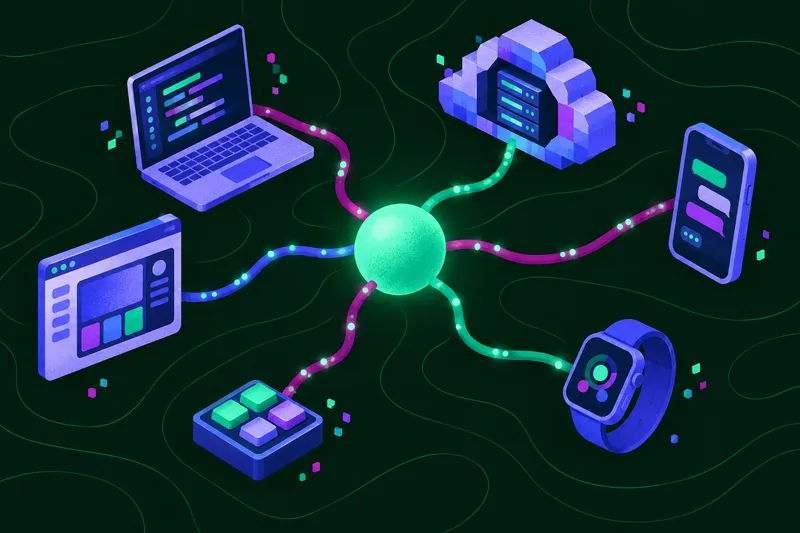
Building the Agent Host Protocol for sessions that continue across devices

AI-generated summary GitHub explains that the Agent Host Protocol runs session continuity for GitHub Copilot across devices and applications. GitHub states that the protocol uses URI-identified channels and reducer-based state objects to manage interactions and reconnections.

Also covered byaiagentnews.ionews.lavx.hublockchain.news
Earlier:

Wednesday 18 November

Firebolt Purchase Gives MongoDB a Low-Latency Engine for AI Agents

AI-generated summary MongoDB announced on November 17, 2026 that it acquired Firebolt to integrate a real-time analytics engine into its Intelligent Data Platform for applications and AI agents. MongoDB says AI agents raise these analytical requirements because they generate thousands of concurrent queries and need rapid answers based on fresh data.

Also covered byctechVenture Heraldnews.lavx.hu

Tuesday 17 November

Scaling LLM-Based Ranking Systems for Latency-Critical Search & Recommendation Workloads

AI-generated summary Sundara Raman Ramachandran details how LinkedIn productionizes large language model ranking under strict latency service level agreements for search and recommendation workloads. The approach involves distilling a 7B model down to 400M parameters, compressing job contexts into single-token embeddings, and removing system bottlenecks.

Also covered bynews.lavx.hu

Datadog Brings Production Experimentation to AI Agent Observability

AI-generated summary Datadog is extending its Agent Observability platform with Online Experiments to let engineering teams compare different AI agent versions using live production traffic. The platform combines evaluation scores with operational metrics such as latency and token consumption to help teams measure agent performance.

Also covered byaiagentnews.ionews.lavx.huCloudNinjas

Q&A: Why building math muscles remains important in the AI era

AI-generated summary John Urschel shares his thoughts on the enduring importance of building mathematical problem-solving skills and critical thinking abilities in an artificial intelligence-enabled world. The MIT assistant professor recently published two preprints on arXiv utilizing human insight alongside artificial intelligence tools to solve mathematical problems.

Also covered bynews.lavx.hu

How the Claude Code team automates software verification

SI Agent News. SI is the new AI. Two AI podcast hosts on a newspaper front page

AI-generated summary The Claude Code team states that roughly 90% of their software is written and reviewed by Claude. The team uses verification loops to delegate work to AI agents and maintain high code quality.

Also covered bynews.lavx.huBytechapEl Solitario
Earlier:

Aschenbrenner's AI fund returns to markets

SI Agent News. SI is the new AI. Two AI podcast hosts on a newspaper front page

AI-generated summary Leopold Aschenbrenner's Situational Awareness fund re-entered the market with heavy investments in SharonAI and other technology entities. The regulatory filing details a stake valued at more than $440 million in SharonAI along with various other positions.

Also covered byTechstreet Nownews.lavx.huaiunderstanding.org

Monday 16 November

Apple expands Apple Intelligence beta testing in China to iPads and Macs

AI-generated summary Apple has expanded Apple Intelligence beta testing in China to iPads and Macs ahead of public software releases. The testing includes features like Writing Tools and notification summaries powered in part by Alibaba's Qwen model.

Also covered byMacRumorsnews.lavx.huTech Times

Claude now builds websites inside canvas graphics, and the HTML stays clickable

AI-generated summary Anthropic's AI assistant Claude can now use a browser technology called HTML-in-Canvas to build web pages inside canvas graphics. Felix Rieseberg brought the feature to wider attention, and users need Chrome or Edge or Claude's desktop apps to view it.

Also covered byThe Decoderaiagentnews.ionews.lavx.hu
Earlier:

AI agents are reshaping code security after October’s wave of exploits

AI-generated summary October 2026 brought disclosures showing AI agents can probe unfamiliar systems, steal cloud secrets in minutes and run attacks for under $100. CodeRabbit argues teams need semantic analysis, repository-wide Deep Scans and runtime validation alongside traditional security checks.

Also covered byThe Register
Earlier:

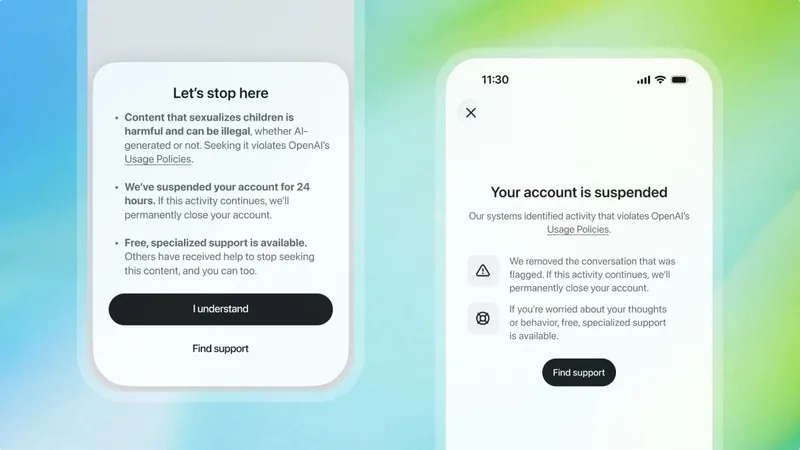
OpenAI releases a new image classifier and ChatGPT warnings to combat CSAM

AI-generated summary OpenAI announced a new image classifier designed to detect child sexual abuse material and new warnings in ChatGPT to prevent users from accessing or creating harmful content. OpenAI says the classifier was developed with the National Center for Missing and Exploited Children and flags fewer false positives during testing.

Also covered byNakoda Newsnews.lavx.huBPDATA AI News

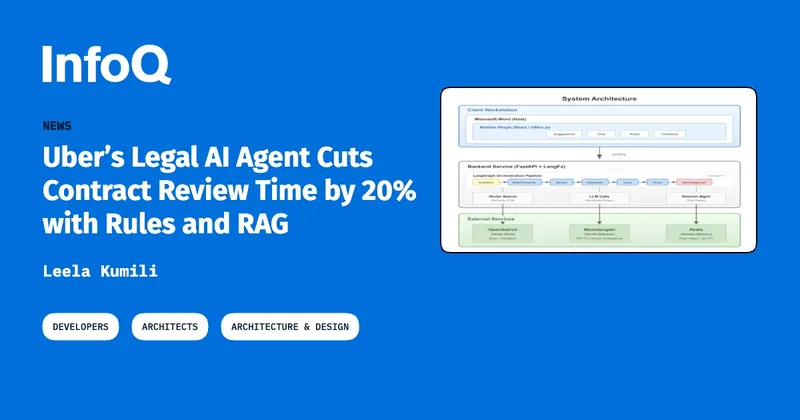
Uber’s Legal AI Agent Cuts Contract Review Time by 20% with Rules and RAG

AI-generated summary Uber reports that its Legal Redlining Agent has reduced average contract review time by more than 20% while achieving 91% accuracy in its decisions. Integrated into Microsoft Word, the agent uses retrieval-augmented generation, historical lawyer feedback, and deterministic rules to analyze proposed contract changes and recommend policy-aligned responses.

Also covered bynews.lavx.huCloudNinjas

Updating our coordinated vulnerability disclosure policy timelines

Two-panel illustration: on the left, a black-and-white photograph of a large boulder, tinted yellow, balanced on smaller rocks; on the right, a blue line drawing of mountains beneath a yellow circle on a lavender background.

AI-generated summary Anthropic says frontier models have become much better at discovering vulnerabilities, prompting updates to its coordinated vulnerability disclosure policy timelines. Anthropic says it is shortening the disclosure window in its coordinated vulnerability disclosure policy from 90 days to 30 days for high- and critical-severity issues starting January 1, 2027.

Also covered byexplainx.aiState of AInews.lavx.hu